Medical care
Hair loss treatment
When follicles are still present or hair loss has a treatable cause, medical treatment may protect existing hair or support regrowth. We identify the cause and choose suitable therapy.
Explore treatment options →
The first consultation establishes whether medical treatment, hair transplantation, or both are appropriate for you. We identify the cause of your hair loss, assess the follicles and donor area, and agree a written plan. The appointment takes 45 to 60 minutes.
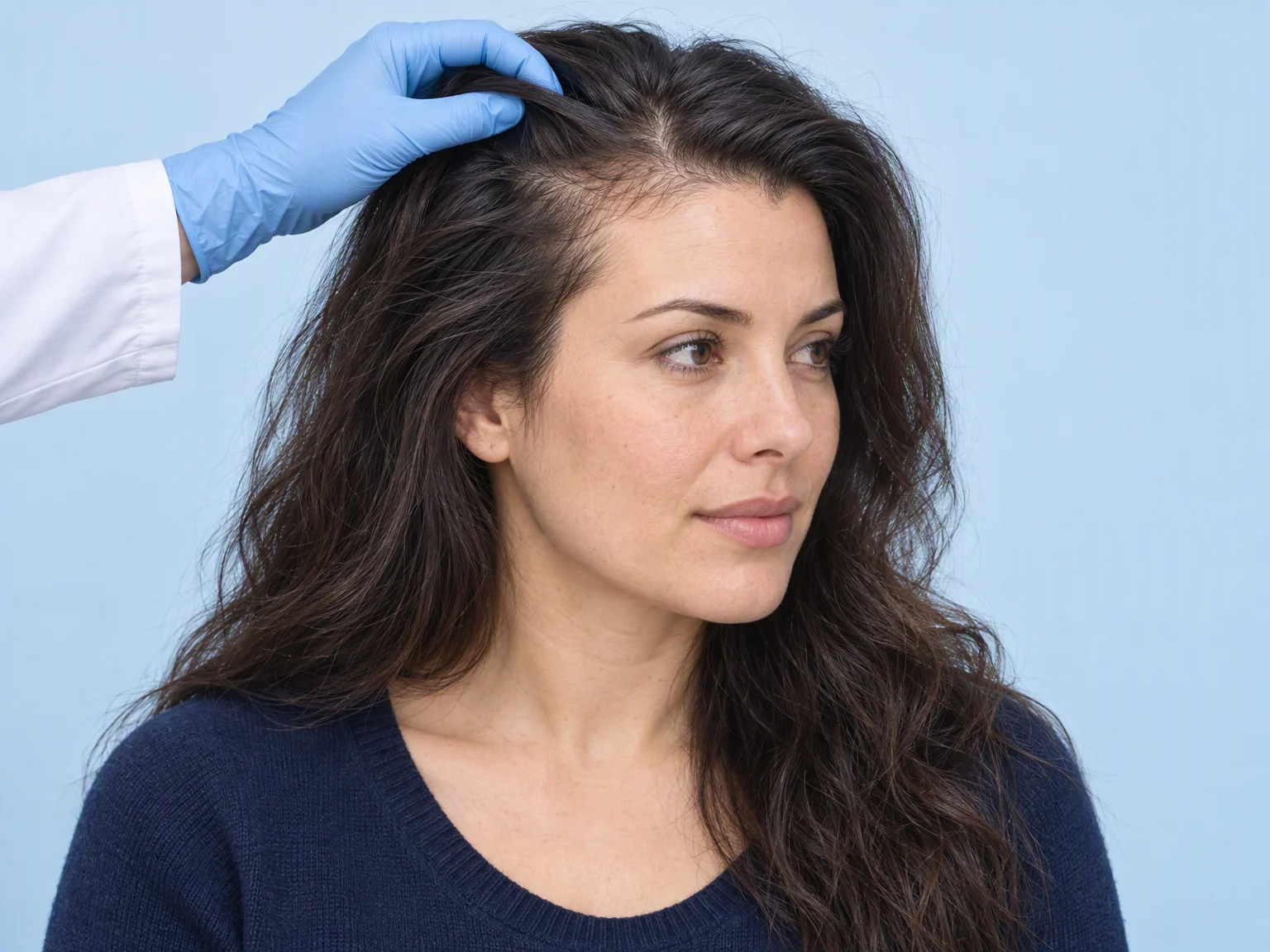
Some hair loss can be helped by treating the underlying cause or protecting existing follicles. Other cases need transplantation to restore coverage. Diagnosis helps us decide which approach will help, and whether treatment needs to come before surgery.
When follicles are still present or hair loss has a treatable cause, medical treatment may protect existing hair or support regrowth. We identify the cause and choose suitable therapy.
Explore treatment options →When loss is established and the donor area is suitable, transplantation may restore coverage. We assess available grafts, plan the areas to cover and decide when surgery is appropriate.
Explore transplant options →Both can be part of the same plan. Medical treatment may be recommended before or after transplantation to manage ongoing hair loss.
When it started, how fast it is moving, family history, medication, recent illness or childbirth, diet and styling habits. Much of the diagnosis is settled here before anyone looks at your scalp.
The pattern of loss is mapped and a gentle traction test shows how many hairs are in the shedding phase. More than a few coming away easily points to active effluvium rather than pattern loss.
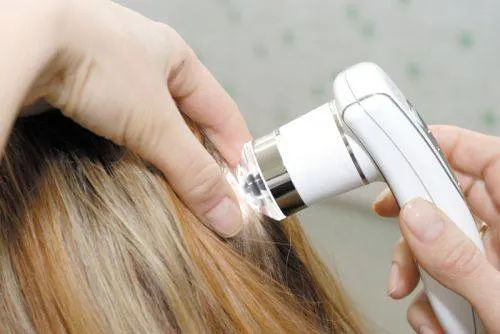
A magnified view of the scalp and follicles. This is what distinguishes miniaturising follicles from healthy ones, and reveals inflammation or scarring that is invisible to the naked eye.
Ferritin, thyroid function, vitamin D and hormonal markers. Ordered when the pattern or history suggests a systemic cause – routinely for women with diffuse shedding.
If surgery is on the table, donor density and scalp laxity are measured. This is what determines how many grafts are actually available, and it caps everything that can be promised.
There is no single test that explains every kind of hair loss. We start with the least invasive methods and add another test only when it can answer a specific clinical question.
A magnified view of the scalp, follicle openings and hair shafts. It helps identify miniaturisation, variation in hair diameter, inflammation and signs of scarring without removing hair or taking a skin sample.
Photographs taken from the same angles and under consistent lighting create a baseline. Later images can show whether shedding, density or the visible pattern has changed during treatment.
These tests estimate how many hairs are growing, resting or shedding. They are useful in selected cases rather than a routine requirement for every person with hair loss.
A small sample of scalp skin can help distinguish scarring from non-scarring alopecia or clarify an inflammatory condition. It is invasive, so it is reserved for cases where examination and trichoscopy do not provide a confident answer.
Laboratory testing is also selective. Ferritin, thyroid function, vitamin D or hormonal markers may be requested when your history and pattern suggest an underlying cause. Tests are interpreted with the examination; a result on its own is not a hair-loss diagnosis.
Dry and uncombed shows real density. Product and blow-drying hide exactly what we are trying to measure.
Several common medications affect hair. It is a quick thing to check and an easy thing to miss.
If you have had thyroid or ferritin tested in the last year, it may save repeating them.
Pictures from two and five years ago show the trajectory better than any single examination can.
We assess whether medical treatment, transplantation, or a combination is appropriate. The consultation includes a full history, a scalp examination with a pull test, trichoscopy, and blood work where indicated. It takes 45 to 60 minutes. You leave with a diagnosis and a written plan.
Examination of the scalp and hair shafts under magnification. It shows the proportion of miniaturised follicles, the variation in hair calibre, and signs of inflammation or scarring – none of which can be judged reliably by eye. It is what separates androgenetic loss from other causes with confidence.
Not everyone does. They are ordered when the history or the pattern suggests a systemic cause – diffuse shedding, sudden onset, or a picture that does not fit pattern loss. For women with diffuse thinning they are close to routine, because thyroid disorder and iron deficiency are common and both are treatable.
Usually not at the first appointment. History, examination and trichoscopy answer most diagnostic questions. A trichogram or phototrichogram may be useful when the hair-growth cycle needs to be measured. A biopsy is reserved for suspected scarring or inflammatory disease, or when the diagnosis remains uncertain.
We can tell you a great deal – the pattern, the likely diagnosis and whether surgery is plausible. What photographs cannot do is measure follicle miniaturisation, detect early scarring, or rule out a systemic cause. For a surgical plan they are usually enough; for an unexplained shed they are a starting point.
A scar alone does not automatically rule out transplantation. We do not transplant into fresh or healing scars. A mature scar may be considered after assessing the skin, blood supply and donor area, and checking that any underlying disease is controlled. Surgery is postponed during acute or active phases of hair-loss conditions, including active alopecia areata.
No. A meaningful share of the people we assess are advised to treat rather than operate, and some are advised to do nothing for now and be reviewed later. A consultation that only ever ends in a quotation is not a consultation.