01
The donor area is parted, not shaved
Hair is sectioned and clipped away in fine partings, exposing a working band of scalp a few centimetres wide. The hair above it falls back over the area as soon as the clips come out.

Our Non-Shave FUE preserves existing hair in both the donor and recipient areas. We take grafts from between donor hairs and implant them between the hairs already growing in the thinning area. Existing hair helps conceal healing sites on both sides of the procedure. Sessions run to about 3,000 grafts in suitable patients.
We work between existing hairs in both areas. The surrounding recipient hair stays uncut; only the hairs on extracted grafts are trimmed for handling.
Hair is sectioned and clipped away in fine partings, exposing a working band of scalp a few centimetres wide. The hair above it falls back over the area as soon as the clips come out.
The same sub-millimetre punch is used as in shaved FUE, angled to the follicle through the surrounding shafts. Extraction is spread across a wide donor zone so no area is thinned visibly.
Each unit is trimmed for handling, inspected under magnification and held in solution. This is the step that differs from a long hair transplant, where the shafts stay long.
We create implantation sites between the hairs already growing in the recipient area, following their angle and direction. That existing hair helps cover the healing sites while the transplanted hairs grow.
This approach is especially useful for adding density among existing hairs and for selected repeat or reconstructive procedures. It is not for everyone. A completely bald recipient area has no existing hair to cover implantation sites, even if the donor area remains unshaved.
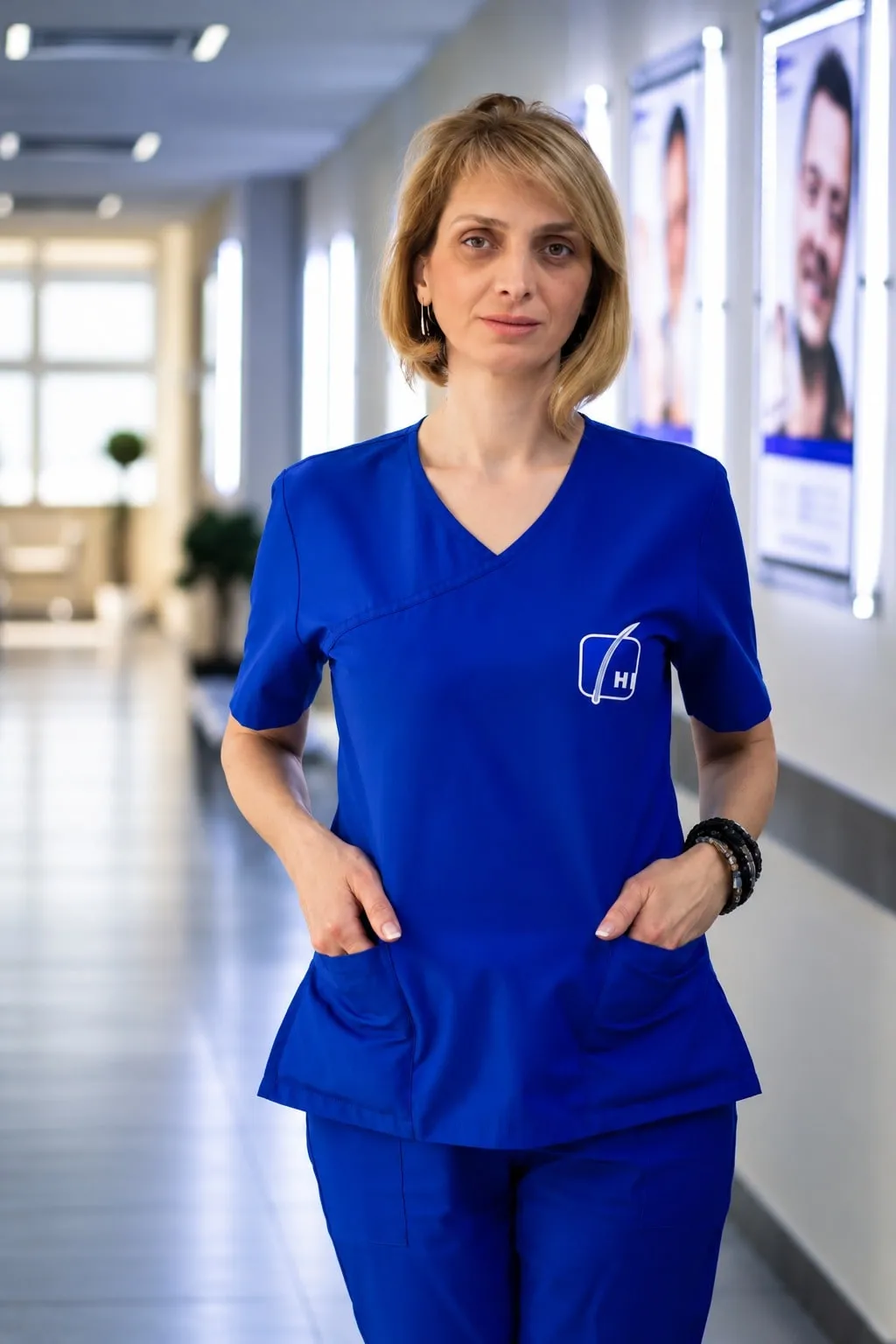
Hair-transplant practice since 2007, with a particular focus on non-shave transplantation.
Meet the surgeon →We assess your donor reserves, the recipient hair still present and the graft count you need before recommending this approach.
A comfortable single day is around 3,000 grafts. Larger cases, up to 6,000 grafts, are done over two days.
Your surgeon explains whether Non-Shave FUE, standard FUE or long-hair transplantation fits your hair and your priorities.
Leaving the donor area unshaved alone does not make every transplant discreet. We assess both working areas before recommending this approach.
Our Non-Shave FUE keeps existing hair unshaved in both the donor area, where grafts are taken, and the recipient area, where they are implanted. We work between the existing hairs. These hairs help cover extraction and implantation sites during healing. The technique is suitable for selected patients, not every pattern of hair loss.
Both methods transplant your own follicles. The general growth timeline is similar: early shedding, regrowth over the following months and assessment at twelve months. Non-Shave FUE preserves surrounding hair in both working areas, but suitability and the achievable density depend on your case.
Working through long hair is slower. Each follicular unit has to be located, isolated and extracted without the visual field a shaved donor area gives you, and the surrounding hair has to be parted and held clear. That puts a comfortable single session at around 3,000 grafts, while shaved FUE can reach 6,000 when clinically required and supported by the donor area. Cases needing more are directed to shaved FUE rather than stretching the technique.
Existing hair can cover healing sites in both the donor and recipient areas, making the procedure less noticeable. Redness, swelling or crusts may still be visible. If the recipient area is completely bald, leaving the donor area unshaved will not conceal the implantation sites at the front.
Non-Shave FUE keeps existing hair uncut in both areas, but the transplanted graft hairs are trimmed for handling. Long-hair transplantation keeps longer hair on the transplanted grafts themselves. These are different approaches: preserving your existing recipient hair is not the same as transplanting long-haired grafts.
Per graft, yes – it takes two to three hours longer for the same number of grafts. The assessment gives you both figures for your case so the difference is a decision you make, not one you discover.
Send photographs of the back and sides of your head for a free preliminary assessment of whether non-shave FUE may suit your case. We aim to reply within two working days.
Show the front edge and surrounding existing hair.
Show the thinning areas from above.
Send a back view and separate photographs of each side.
Your photographs give us a starting point. Your surgeon confirms suitability and the plan after assessment.