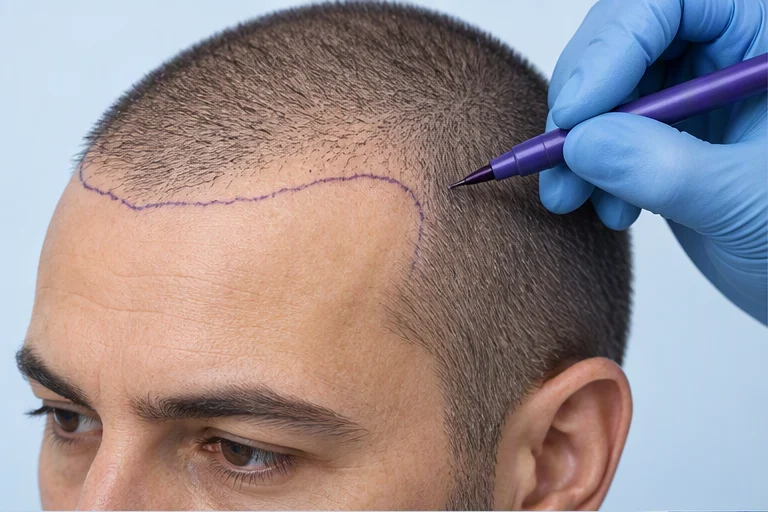
STEP 1
Planning & hairline design
The surgeon maps your donor capacity and draws the new hairline with you, follicle density calculated per zone.

FUE (Follicular Unit Extraction) is a hair transplant method in which follicles are extracted from the donor area one by one and implanted into thinning zones. It leaves no linear scar, uses local anesthesia, takes 6–8 hours, and full results appear within 6–12 months.
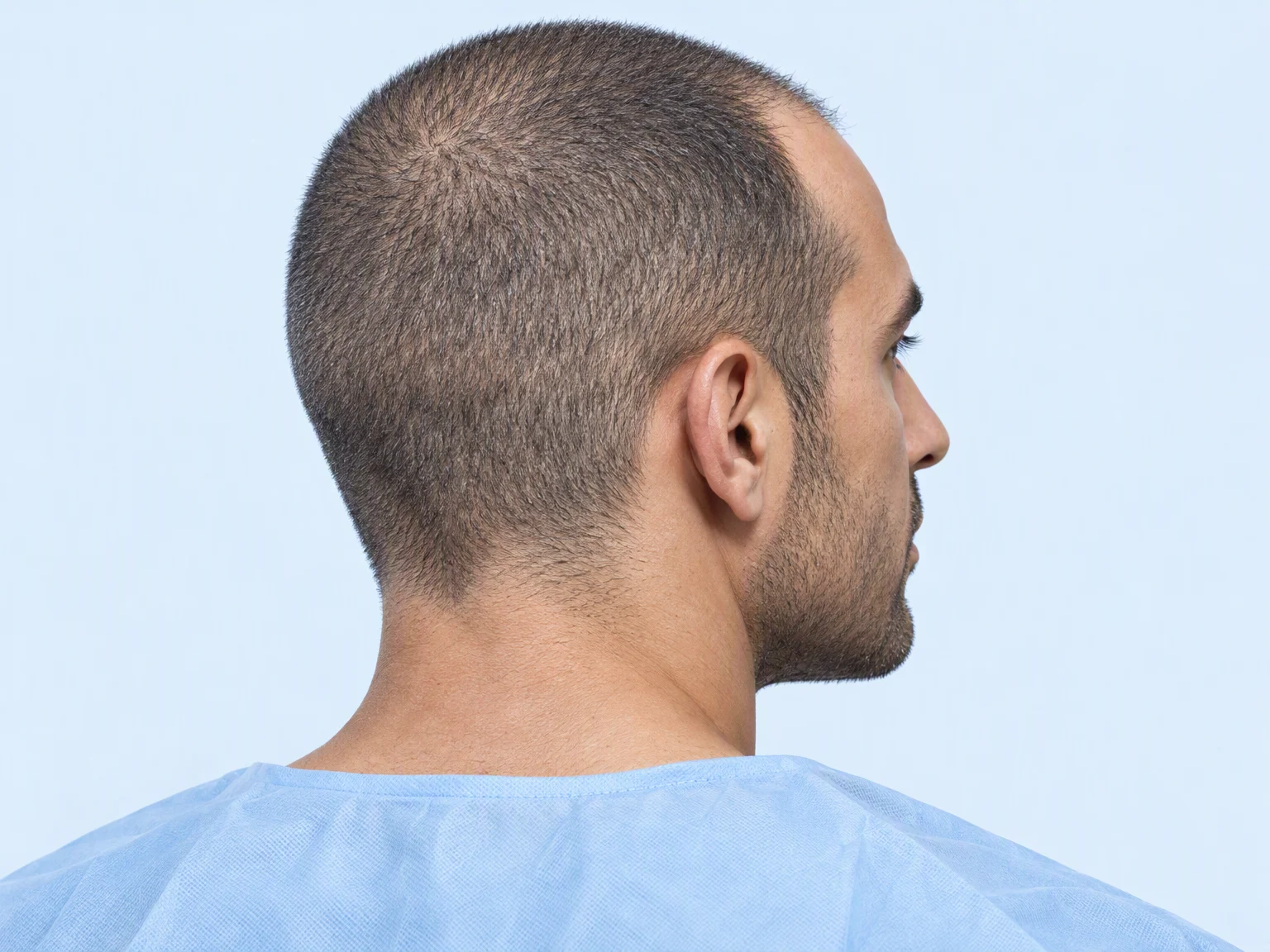
We performed our first FUE procedure in 2007. Advanced FUE is now our primary technique. Each follicular unit is extracted with a micro-punch under 1 mm in diameter, examined under magnification, and implanted at the natural angle and density of your original hairline.
An FUE procedure at Hairline International follows four stages, all completed in a single day.
The surgeon maps your donor capacity and draws the new hairline with you, follicle density calculated per zone.
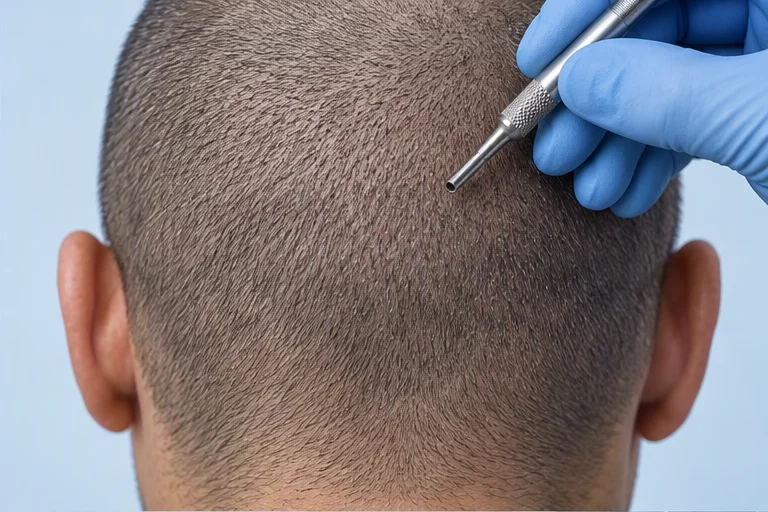
Follicular units are extracted one by one with a sub-millimeter micro-punch under local anesthesia. Painless after numbing.
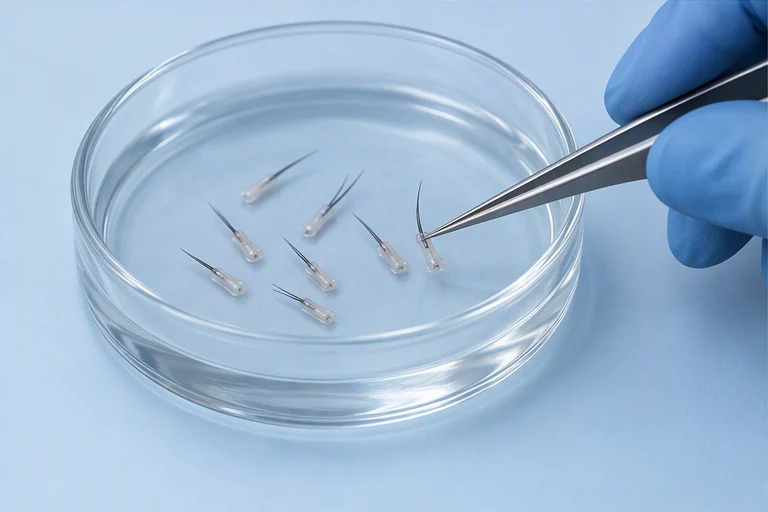
Each graft is inspected and sorted under magnification, then kept in a holding solution to maximize survival rate.
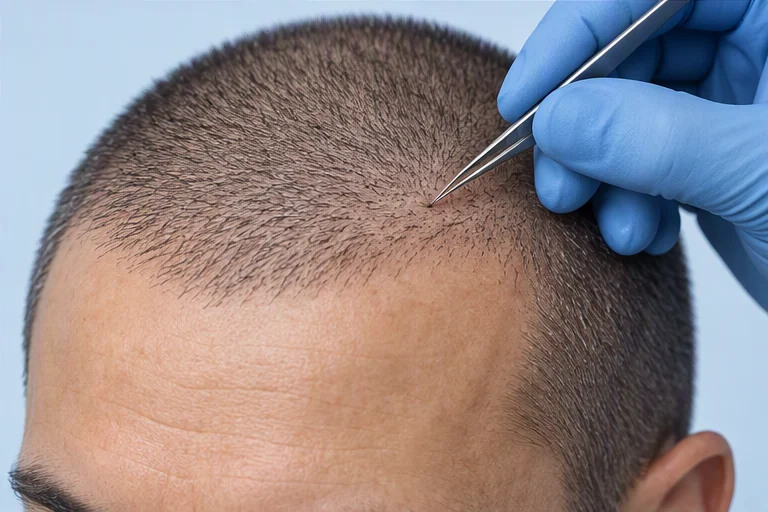
Grafts are implanted at the natural angle, direction and density of your original hair. You go home the same day.
We assess the usable donor zone and spread extraction to protect the hair that remains.
Grafts are counted, inspected under magnification and protected in holding solution.
Your surgeon selects the areas, angles and density according to your goals and donor supply.
Illustrative anatomy, not a personalised donor map. The safe harvesting area and recipient plan are assessed individually.
FUE suits most patients with stable androgenetic hair loss and a healthy donor area at the back of the head. Your surgeon confirms candidacy at the free assessment.
Our published cases each state the graft count and how many months after surgery the second photograph was taken, shot in the same place under the same light. They are not shown here because the technique used in each has not been confirmed per case – putting them on this page would assert a method we cannot stand behind.
No. The procedure is done under local anesthesia – you feel only the initial numbing injections. Most patients watch films or nap during surgery.
Transplanted hairs shed in weeks 2–4, then regrow permanently. Visible density appears by month 6, with the full result at 12 months.
For life. Donor follicles come from the zone that is genetically resistant to balding and keep that resistance after transplantation.
Yes. Our Non-Shave FUE keeps existing hair unshaved in both the donor and recipient areas. It suits selected cases where existing hair can cover the healing sites, such as density enhancement or some repeat procedures. A completely bald recipient area cannot conceal implantation sites with existing hair.