Beard
Beard hair can provide additional donor grafts. Its thickness and texture influence where it can be placed within the scalp restoration plan.

Body hair transplantation moves suitable follicles from the beard or body to the scalp. At Hairline International, we consider it when scalp donor hair is insufficient, including reconstructive work after a previous transplant. It adds a possible donor source; it does not make donor supply unlimited.
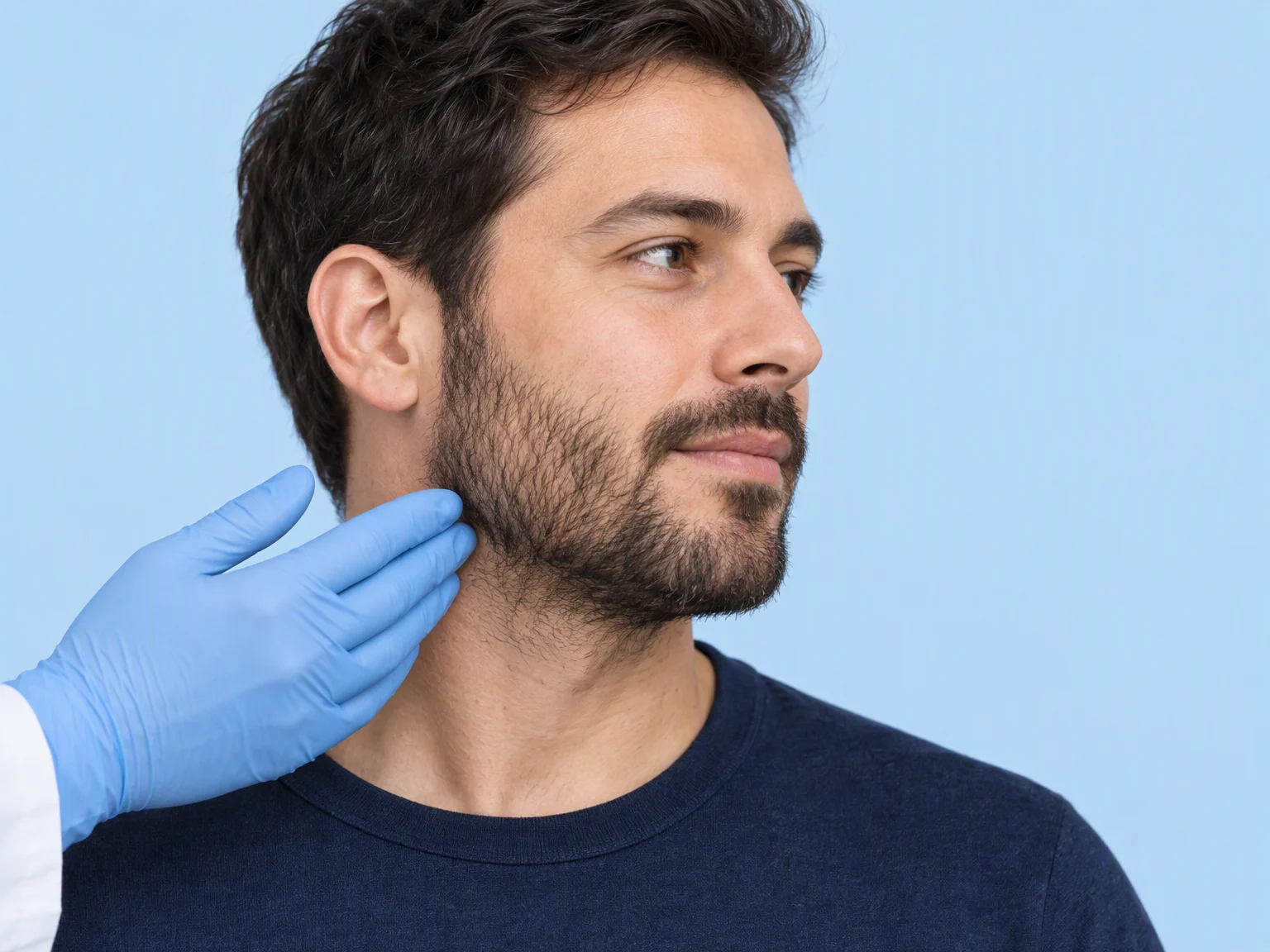
Beard hair can provide additional donor grafts. Its thickness and texture influence where it can be placed within the scalp restoration plan.
We may assess chest hair, shoulder hair and other suitable areas. The presence of body hair alone does not establish that it is a useful donor source.
We assess the scalp first. Where appropriate, body grafts supplement the scalp hair still available rather than replacing it entirely.
An over-harvested scalp donor area can leave few options for correcting an unnatural hairline, missing density or visible scars. Suitable beard or body hair may provide additional grafts for a repair plan.
We assess what was done previously, the condition of the recipient tissue and every usable donor source. The priority is a realistic improvement without further exhausting donor hair.
Explore repair and corrective transplantation →Start by sending photographs of your scalp donor area and the areas you want to restore. Tell us about previous procedures. We will explain what additional photographs or an in-person examination are needed.
BHT uses follicles from the beard or suitable body areas as donor grafts for the scalp. It is different from a beard transplant, which places hair into the beard. We consider BHT when scalp donor hair is insufficient or a previous transplant needs repair.
The beard and chest are possible sources. Other areas, including the shoulders, may be assessed where the hair is suitable. We examine the available density, hair thickness, texture and growth characteristics before deciding what can be used.
It can provide additional grafts for selected repair cases when scalp reserves are depleted. We assess the previous work, scarring, remaining scalp hair and suitable body donor hair. It does not reverse earlier donor damage or guarantee enough hair for full coverage.
Not necessarily. Body hair can differ in thickness, curl, length and growth cycle. We select its placement carefully and may combine it with available scalp grafts. The donor source affects what density and appearance are achievable.
FUE extraction can leave small dot-shaped scars in the body donor area. Visibility depends on healing, skin characteristics and the amount harvested. We discuss these trade-offs before recommending surgery.
Further reading: ISHRS on revision and repair and body-hair donor considerations. These explain general principles, not outcomes promised for an individual case.